
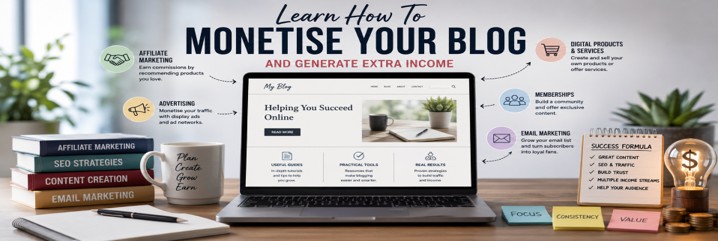
Learn how to monetise your blog with affiliate marketing, ads, digital products, memberships, SEO, and email marketing strategies that grow income.
Starting a blog can feel incredibly exciting.
The idea of sharing your thoughts, helping people, building an audience, and eventually creating an income online is something that attracts many people to blogging in the first place.
But once the initial excitement settles, many bloggers begin asking the same question:
How do you actually make money from a blog?
The truth is that blog monetisation usually takes time. Most successful bloggers don’t earn meaningful income overnight. Instead, they slowly build traffic, trust, authority, and multiple income streams over time.
The good news is that there are now more ways than ever to monetise a blog — even if you’re still relatively new.
Let’s look at some of the most effective ways bloggers generate extra income online.
Create Helpful Content First
Before monetisation even becomes a realistic possibility, your blog needs something valuable at its core:
helpful content.
People rarely return to blogs that exist purely to sell products or chase clicks.
The blogs that tend to grow successfully over time are usually the ones that:
- solve problems
- answer questions
- educate
- entertain
- inspire
- or genuinely help their audience in some meaningful way
That starts with understanding who your audience actually is.
Ask yourself:
- What problems are they trying to solve?
- What information are they searching for?
- What challenges are they struggling with?
- What type of content would genuinely help them?
The better you understand your readers, the easier it becomes to create content that truly resonates with them.
This has become even more important in recent years because blogging and SEO have changed dramatically.
With the rise of AI-generated content and mass-produced articles, the internet has become flooded with repetitive, low-value content written primarily to chase rankings rather than help people.
Google has responded to this through a series of Helpful Content Updates (HCU), which increasingly reward:
- useful content
- genuine experience
- authenticity
- topical authority
- strong user experience
- and content written for real people rather than purely for search engines
In simple terms: Google wants to rank content that genuinely helps people.
That means bloggers who focus on creating honest, useful, experience-driven content are often building much stronger long-term foundations than those chasing shortcuts or trying to manipulate rankings.

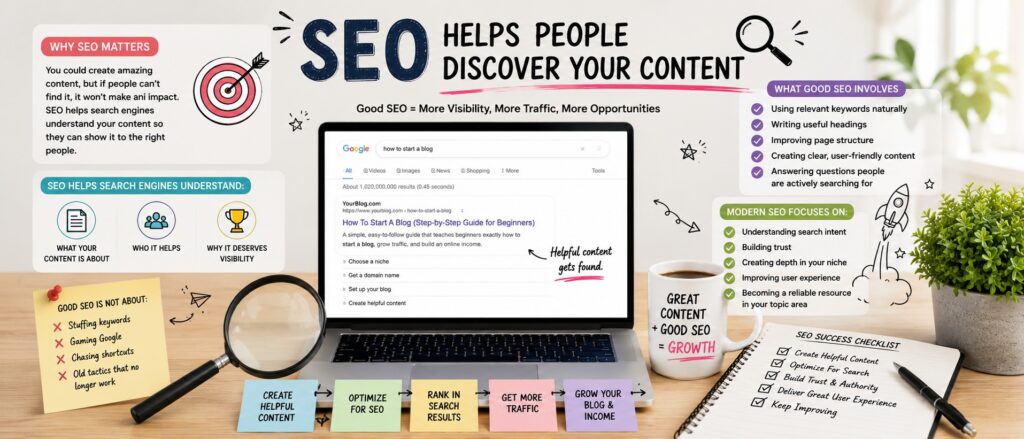
SEO Helps People Discover Your Content
One of the biggest mistakes new bloggers make is creating content without considering how people will actually discover it.
This is where SEO (Search Engine Optimisation) becomes important.
SEO can sound technical at first, but much of it simply comes down to helping search engines clearly understand:
- what your content is about
- who it helps
- and why it deserves visibility
That includes:
- using relevant keywords naturally
- writing useful headings
- improving page structure
- creating clear user-friendly content
- and answering questions people are actively searching for
Good SEO is not about stuffing keywords everywhere or trying to “game” Google.
In fact, those old-style SEO tactics are becoming far less effective as search engines become better at recognising genuinely helpful content.
Modern SEO is increasingly about:
- understanding search intent
- building trust
- creating depth within your niche
- improving user experience
- and becoming a reliable resource within your topic area
Over time, strong SEO can become one of the biggest long-term traffic sources for your blog — especially when combined with genuinely useful content that people actually want to read, share, and return to.
Let Your Personality Show
One thing that often separates memorable blogs from forgettable ones is personality.
People connect with people.
And honestly, this matters more now than ever before.
That’s where your voice becomes one of your biggest strengths.
Sharing:
- personal experiences
- lessons you’ve learned
- mistakes you’ve made
- honest opinions
- and real stories
…helps build trust with your audience in a way that generic content simply cannot.
You do not need to pretend to be an expert who knows everything.
In fact, many readers appreciate honesty far more than perfection.
People want to learn from real people who are genuinely experiencing the journey themselves, not content that feels manufactured purely for search engines.
Authenticity is often what turns casual visitors into loyal readers — and in a world increasingly filled with AI-generated content, genuine human personality is becoming more valuable, not less.

Using Advertisements To Generate Blog Income
One of the most common ways bloggers monetise their websites is through advertisements.
This can include:
- display ads
- banner ads
- sponsored placements
- PPC (Pay-Per-Click) ads
- or ad networks like Google AdSense
For beginners, platforms like Google AdSense are often the easiest place to start because they’re relatively simple to set up.
As your traffic grows, you may eventually qualify for higher-paying ad networks that offer stronger earnings.
However, it’s important to understand that advertisements usually work best when a blog already has decent traffic levels.
Small blogs can still earn from ads, but significant advertising income often requires:
- steady traffic
- quality content
- and consistent audience growth
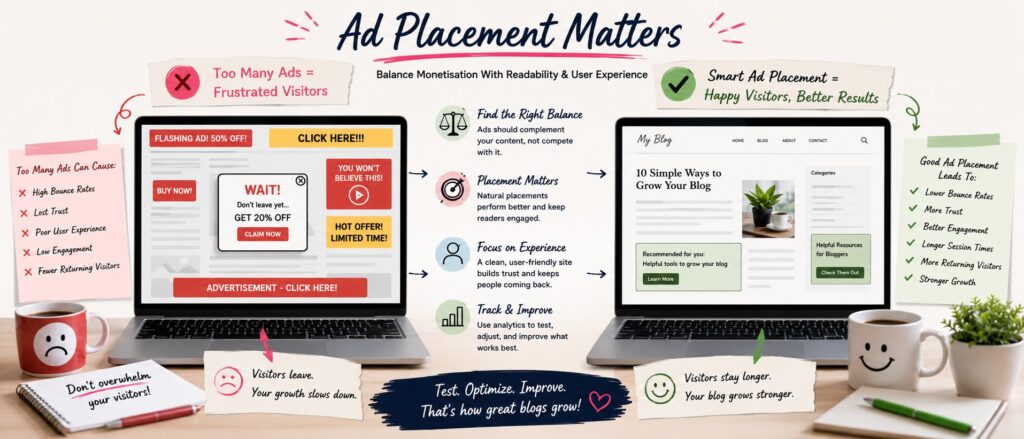
Ad Placement Matters
When bloggers first start monetising their websites, there’s often a temptation to add as many advertisements as possible.
More ads mean more clicks and more income… right?
Not necessarily.
In reality, too many advertisements can quickly damage the overall user experience and actually hurt your blog long-term.
If visitors are overwhelmed by:
- excessive banners
- intrusive pop-ups
- autoplay videos
- flashing ads
- or constant interruptions
…many will simply leave your website altogether.
This can increase bounce rates, reduce trust, hurt engagement, and make people far less likely to return in the future.
The goal is not to cram your blog with advertisements.
The goal is to balance monetisation with readability and user experience.
Well-placed advertisements should complement your content rather than constantly interrupt it.
Positioning matters too.
Advertisements placed naturally within a layout often perform far better than ads that aggressively break the flow of the content or frustrate readers.
A clean, user-friendly website usually builds:
- more trust
- longer session times
- more returning visitors
- and stronger long-term growth
Experimenting with placement and monitoring analytics can help you better understand what works best for both your audience and your blog.
Earning Through Recommendations
Affiliate marketing is one of the most popular ways bloggers generate income online.
In simple terms, affiliate marketing involves recommending products or services and earning a commission if somebody purchases through your referral link.
But successful affiliate marketing is not about aggressively selling products.
It’s about recommending things that genuinely help your audience.
For example:
- a food blogger may recommend kitchen equipment
- a fitness blogger may recommend workout programmes
- a travel blogger may recommend luggage or booking platforms
- a blogging website may recommend website tools or training platforms
The most successful affiliate recommendations usually feel natural and relevant.
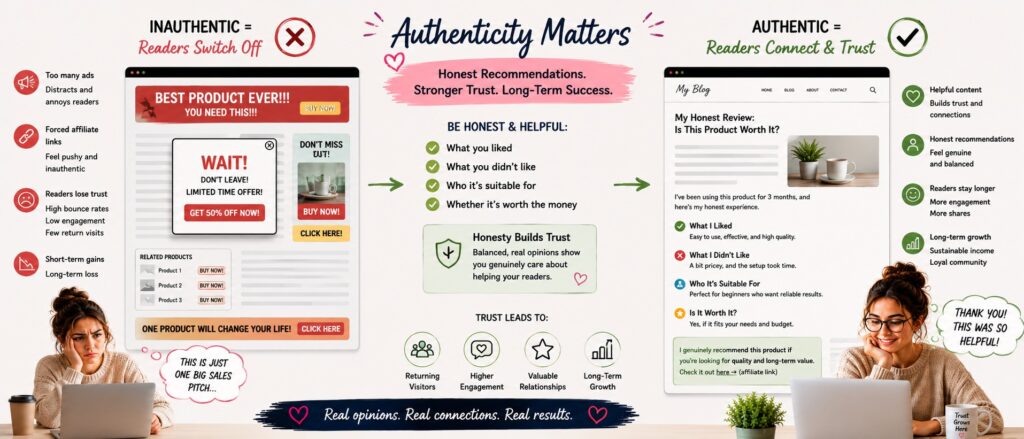
Authenticity Matters
You’ve probably experienced this yourself before.
You click on an article that genuinely grabs your attention. The title sounds helpful, the topic is interesting, and at first the content feels promising…
…but then every other paragraph contains another forced product recommendation, aggressive sales pitch, or obvious affiliate link.
Eventually, it stops feeling helpful and starts feeling like the entire article only exists to sell something.
That’s usually the moment readers mentally switch off.
I know I’ve certainly felt like this many times myself.
That’s why authenticity matters so much in affiliate marketing.
Readers can often tell when somebody is promoting products purely for commissions rather than genuinely trying to help.
If you genuinely use something, explain:
- what you liked
- what you didn’t like
- who it’s suitable for
- and whether it’s actually worth the money
Honest recommendations almost always build far more trust than exaggerated hype ever will.
In fact, sometimes mentioning limitations or downsides can actually strengthen your credibility because it shows readers that your opinion is balanced rather than purely sales-driven.
Trust is one of the most valuable assets any blogger can build.
And once readers trust your recommendations, they’re far more likely to return to your website, engage with your content, and value your opinions long-term.
Track What Works
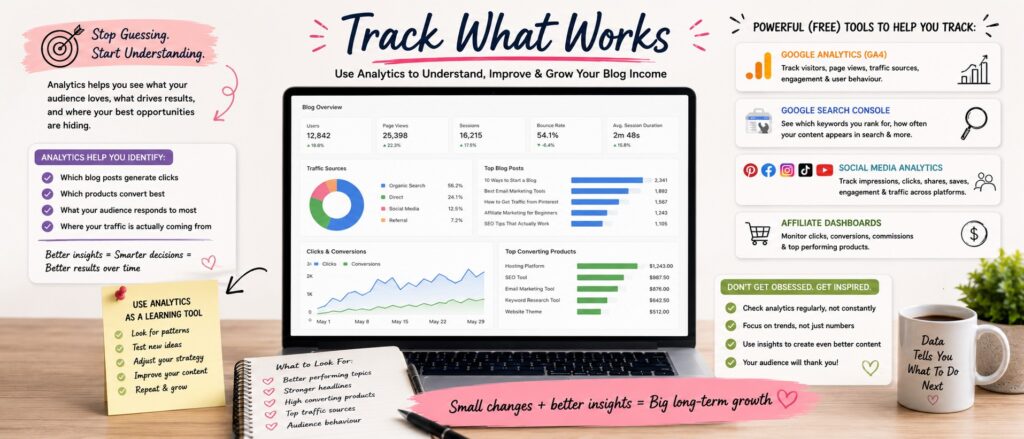
In the beginning, analytics can feel confusing or even intimidating — but over time, they become incredibly valuable for understanding what your audience actually responds to.
One useful habit in affiliate marketing is regularly reviewing what content and links are actually performing well.
Analytics can help you identify:
- which blog posts generate clicks
- which products convert best
- what your audience responds to most
- and where your traffic is actually coming from
This allows you to improve your strategy over time instead of simply guessing.
Thankfully, there are some excellent free tools available that can help beginners understand what’s happening on their website.
For example:
- Google Analytics (GA4) helps track visitor behaviour, page views, traffic sources, and audience engagement.
- Google Search Console shows which keywords people are searching for, which pages are ranking in Google, and how often your content appears in search results.
- Social media analytics tools can help you understand which content is generating impressions, clicks, shares, saves, engagement, and traffic across platforms like Pinterest, Facebook, Instagram, TikTok, or YouTube.
- Many affiliate programmes also provide their own dashboards showing clicks, conversions, and commission performance.
The important thing is not to become obsessed with checking stats every hour.
Instead, use analytics as a learning tool.
Over time, patterns begin to appear:
- certain topics may perform better
- certain headlines may attract more clicks
- some affiliate products may convert more strongly than others
- and some traffic sources may become far more valuable than expected
Those insights can help you make smarter decisions and gradually improve your content strategy over time.
Selling Your Own Products Or Services
Many bloggers eventually move beyond advertisements and affiliate marketing by creating their own products or services.
This can become one of the most rewarding forms of monetisation because you have much more control over your income streams.
Digital products are especially popular because they can often be created once and sold repeatedly.
Examples include:
- eBooks
- printable guides
- templates
- recipe collections
- online courses
- worksheets
- digital downloads
- or blogging resources
If you’ve developed useful skills or knowledge within your niche, there’s a good chance your audience may eventually pay for resources that help them solve problems faster.
Offering Services
Some bloggers also monetise through services such as:
- coaching
- consulting
- freelance writing
- website help
- social media management
- or Pinterest management
Service-based income can sometimes generate revenue much faster than display ads because you’re selling expertise directly rather than relying purely on traffic.
Memberships And Exclusive Content
Another growing monetisation method is creating exclusive content for paying members.
Platforms like:
- Patreon
- Substack
- Ko-fi
- or private membership websites
…allow creators to build communities around their content.
Memberships can include:
- bonus articles
- exclusive tutorials
- downloadable resources
- behind-the-scenes content
- private communities
- or early access content
This approach works particularly well when readers strongly connect with your personality and brand.
Building A Community Around Your Blog
One thing many successful bloggers eventually realise is this:
People often stay for the community as much as the content itself.
Responding to comments, interacting on social media, replying to emails, and genuinely engaging with your audience can make a huge difference over time.
Readers are much more likely to support creators they feel connected to.
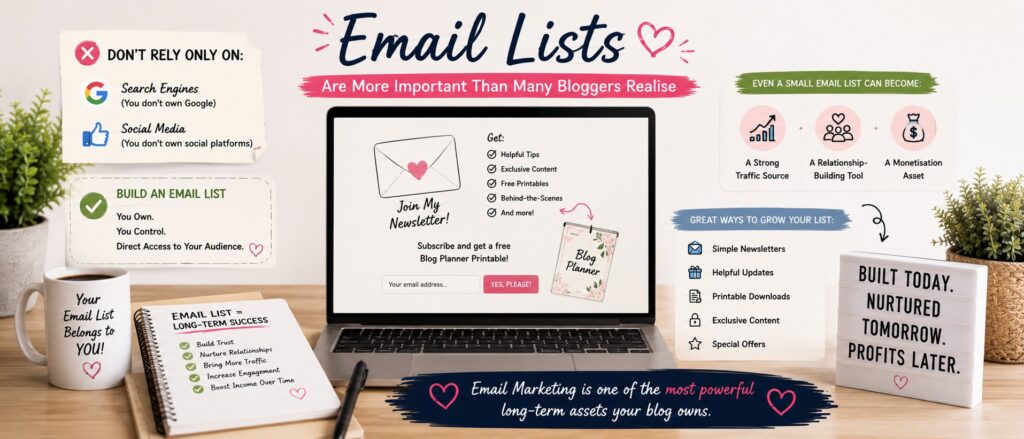
Email Lists Are More Important Than Many Bloggers Realise
One mistake many bloggers make early on is relying entirely on search engines or social media traffic.
Building an email list gives you something incredibly valuable:
direct access to your audience.
Unlike social platforms or Google rankings, your email list belongs to you.
Even a small email list can become:
- a strong traffic source
- a relationship-building tool
- and eventually a monetisation asset
Simple newsletters, helpful updates, printable downloads, or exclusive content can encourage readers to subscribe.
Over time, email marketing can become one of the most powerful long-term assets your blog owns.
Monetisation Usually Starts Slowly
One important thing to understand is that most blogs do not become profitable immediately.
In fact, many bloggers earn very little in the beginning.
That’s completely normal.
Blog monetisation usually compounds over time as you:
- improve your content
- build trust
- grow traffic
- strengthen SEO
- increase authority
- and better understand your audience
Most successful bloggers build multiple income streams gradually rather than relying on a single monetisation method.
If you’re still learning how blogging, SEO, affiliate marketing, and online income all fit together, having the right guidance can make the journey feel far less overwhelming.
Ready To Learn Affiliate Marketing Step-By-Step?
Wealthy Affiliate is the platform that helped me learn website building, SEO,
affiliate marketing, content creation, Pinterest, and how online business actually works.
If you’re feeling overwhelmed or unsure where to begin, having structured training
and a supportive community can make the entire process feel far less intimidating.
Final Thoughts
There are many different ways to monetise a blog, and the best approach usually depends on your niche, audience, interests, and long-term goals.
For some bloggers, affiliate marketing becomes the biggest income source.
For others, advertisements, digital products, memberships, or services may eventually generate more revenue.
The important thing is to focus on creating genuinely valuable content first.
Trust, traffic, and monetisation usually grow together over time.
Blogging is rarely a “get rich quick” system.
But with consistency, patience, and a willingness to keep learning, it can absolutely become a powerful long-term income stream.
How are you currently monetising your blog, or which method interests you most?
Disclosure: Some of the links on this website may be affiliate links, which means we may earn a commission if you click on the link and make a purchase. However, please rest assured that we only recommend products or services that we genuinely believe in and use ourselves. Your support helps keep this website running and allows us to continue providing you with valuable content. Thank you for your support!
